Stump Grinding & Removal in Fredericksburg, VA
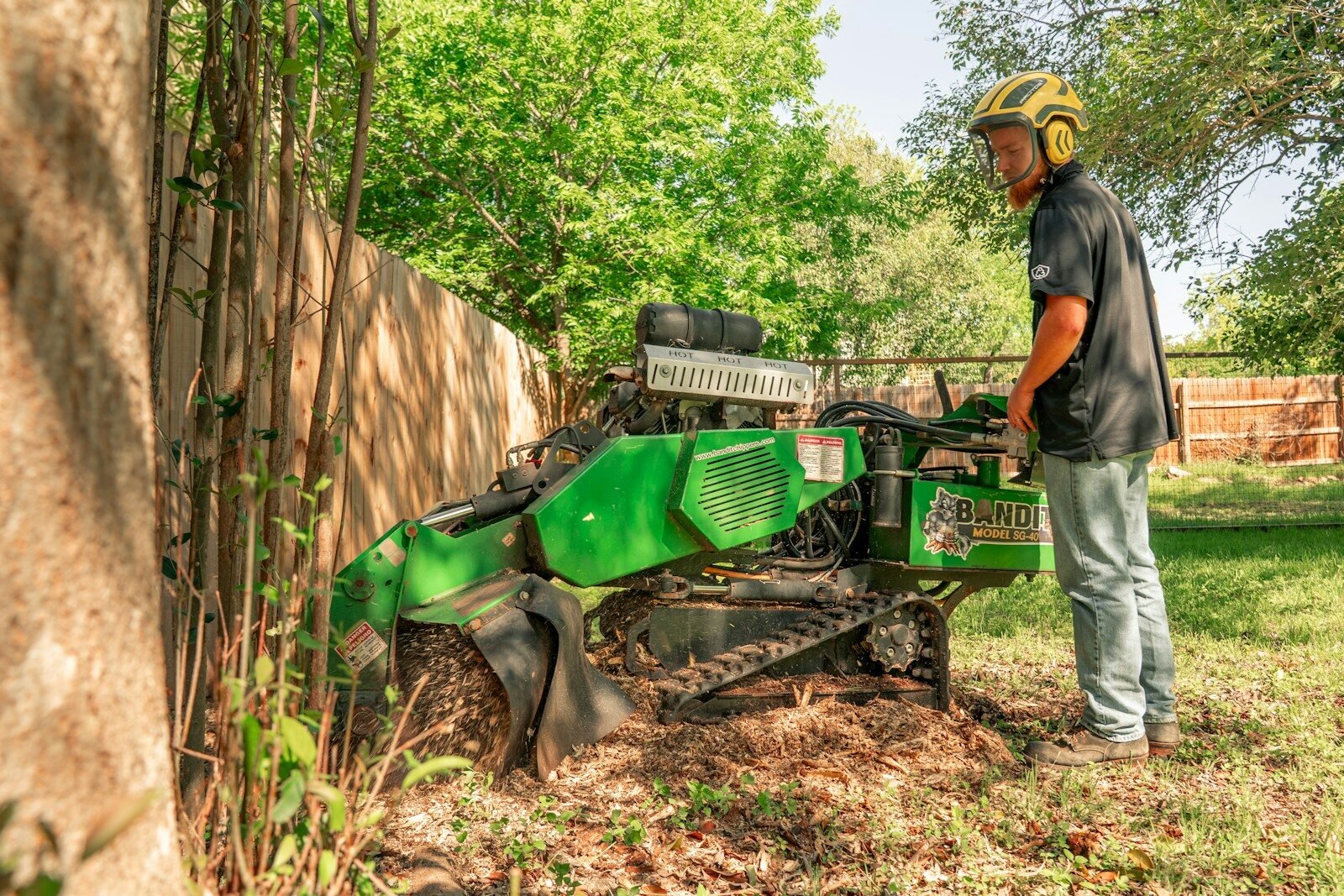
A stump looks harmless. Then the mower deck finds it, the grass refuses to cover it, the kids trip over it, and — if it is an oak, locust, or a few other local species — it starts sending up a thicket of sprouts every spring. Grinding is the standard fix, and it is a much smaller job than most people expect.
How Stump Grinding Works
A stump grinder is a machine with a rotating cutting wheel that chews the stump down in passes, a few inches at a time. The operator works across the stump and the surface roots until the wood is below ground level — typically 6 to 12 inches down, and deeper when the spot will be replanted or built over. What is left is a pile of wood grindings mixed with soil, which settles into the hole. Most grindings can stay right there as fill and rough mulch; if you want them hauled away and topsoil brought in for immediate seeding, say so when the job is quoted, because that changes the work.
Access matters more than stump size for scheduling: a grinder has to get to the stump. Most machines fit through a standard yard gate, but a stump behind a pool enclosure, up a steep slope, or in a tight side yard is worth mentioning when you call — it decides which machine the company brings.
Grinding vs. Full Stump Removal
Grinding leaves the root system in the ground to decay over the years, which is fine for lawn, planting beds, and almost every residential purpose. Full removal — digging the stump and root ball out with an excavator — is the exception, mainly where a foundation, driveway, or other construction will sit on the exact spot, because buried roots eventually decay and can leave a soft spot. If you are not sure which you need, tell the company what is planned for the spot; that answer decides it.
A Few Honest Notes
- Grindings settle. The filled hole will sink some over the first season as the material compacts. A mound left slightly high at grinding time is normal and intentional.
- Sprouting species. Some stumps keep trying. Grinding deeper across the root flare reduces it, and your operator can tell you honestly whether your species is a likely resprouter.
- Old stumps count too. A stump does not have to be fresh. Years-old stumps grind the same way — often faster, since decay has softened the wood.
Pricing turns on diameter, depth, access, and how many stumps are on the list — several stumps in one visit price better per stump than several separate visits, so if the yard has more than one, put them all on the list at once.
Tell us roughly how many stumps, about how wide they are, and whether a gate or slope stands between the street and the stump. We will connect you with an insured local company that does this work.
Related: Tree Removal · Tree Removal Cost Guide · Contact