Tree Removal in Fredericksburg, VA
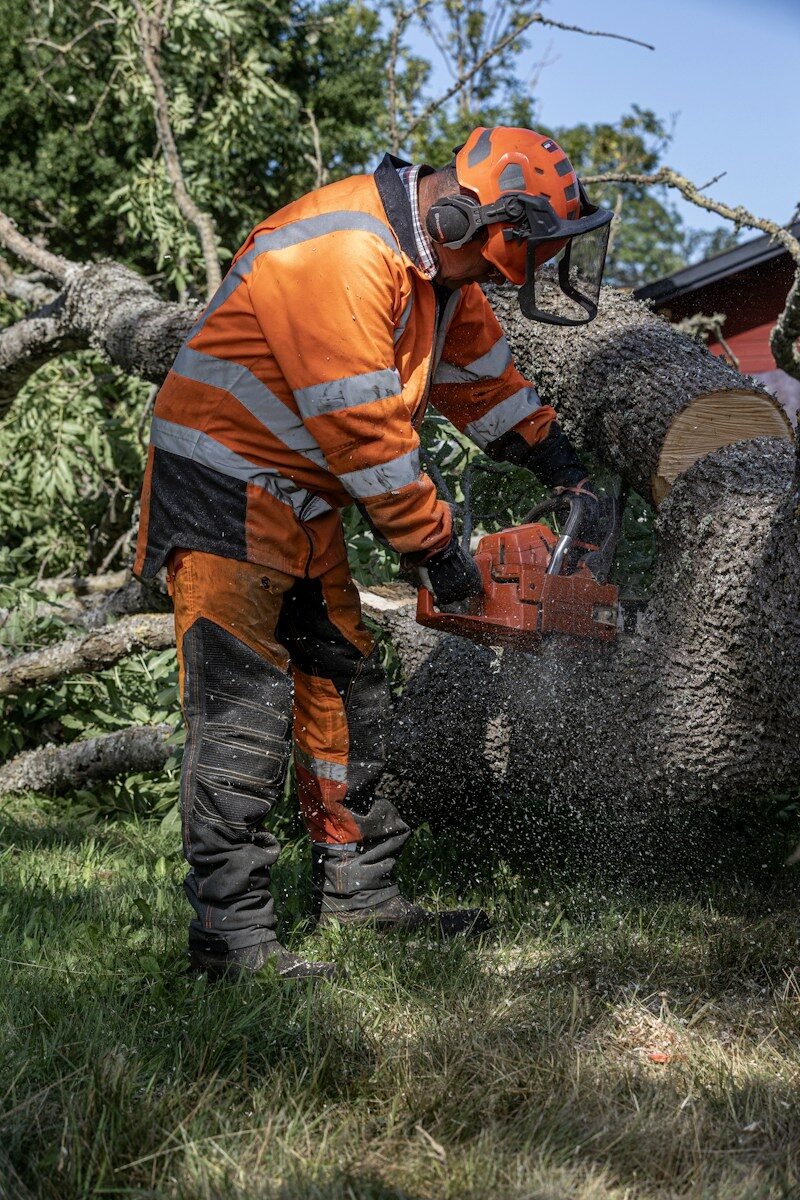
Removing a tree is straightforward when there is room to drop it and genuinely technical when there is not — and in Fredericksburg’s neighborhoods, there usually is not. Most removals here happen in fenced yards, over roofs, driveways, pools, and gardens, a few feet at a time. Here is how a professional job actually runs, so you know what you are paying for.
How a Removal Works
- The assessment comes first. A good company looks at the tree’s condition, lean, defects, and targets — what is underneath it — before quoting. A dead or hollow tree cannot always be climbed safely, which changes the equipment and the price.
- Climbing and rigging. On most residential jobs, a climber works the tree down in sections, lowering each piece on ropes so nothing free-falls onto the roof, fence, or landscaping below. This is slow, skilled work, and it is why proximity to structures is the biggest price factor.
- Crane removals. For very large, dead, or badly positioned trees — or trees a climber cannot safely work in — a crane lifts sections out whole. Crane days cost more, but on the right tree they are faster and safer than any alternative.
- The wood and debris. You choose, and it is priced accordingly: logs and brush chipped and hauled away, firewood-length rounds left for you, or some of each. Hauling is real labor and real disposal cost; leaving firewood on site is one honest way to lower a quote.
- The stump is separate. Removal takes the tree to ground level. Taking the stump below grade is stump grinding, quoted separately — see that page for what it involves.
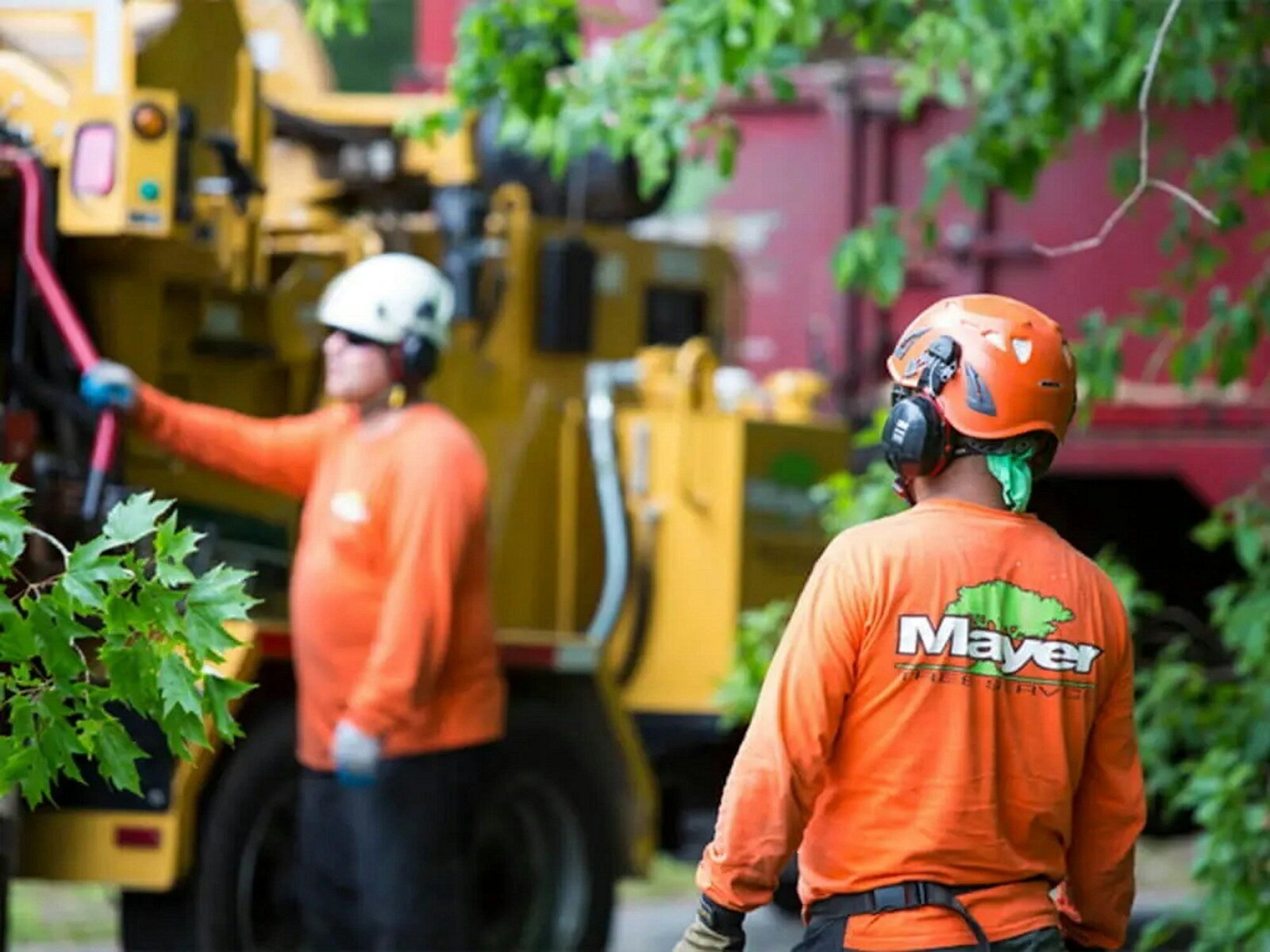
When Removal Is the Right Call
Dead trees do not heal. A tree that has lost its canopy, sheds bark in sheets, or shows fungal growth at the base is a tree on a timeline, and that timeline ends with it coming down — planned, or in a storm. The same goes for trees with major splits, cracks through the trunk, a sudden new lean, or roots lifting on one side. Our Dangerous Tree Guide lists the signs in plain language. Removal is also reasonable for a healthy tree that is simply wrong for its spot: planted too close to a foundation, lifting a driveway, or crowding out everything around it.
Removing one hazardous tree is a different job from clearing land — different equipment, different crew, different goal. This site is about the individual trees around your home, handled one at a time.
Safety Is Not Optional
Tree work is consistently among the most dangerous trades in the country. That is why the insurance requirement on this site is not flexible: companies matched here must carry liability insurance and workers’ compensation insurance. Ask any company you talk to — through us or anywhere else — for proof of both before work starts. If a worker without workers’ comp is hurt in your tree, the claim can come looking for the homeowner.
Tell us the tree’s approximate size, what it is near, and whether it is on or leaning toward a structure. Prefer to write it out? Use the contact form with the same details, and we will connect you with an insured local company.
Related: Tree Removal Cost Guide · Stump Grinding & Removal · How to Tell a Tree Is Dangerous · Contact