Emergency & Storm Tree Service in Fredericksburg, VA
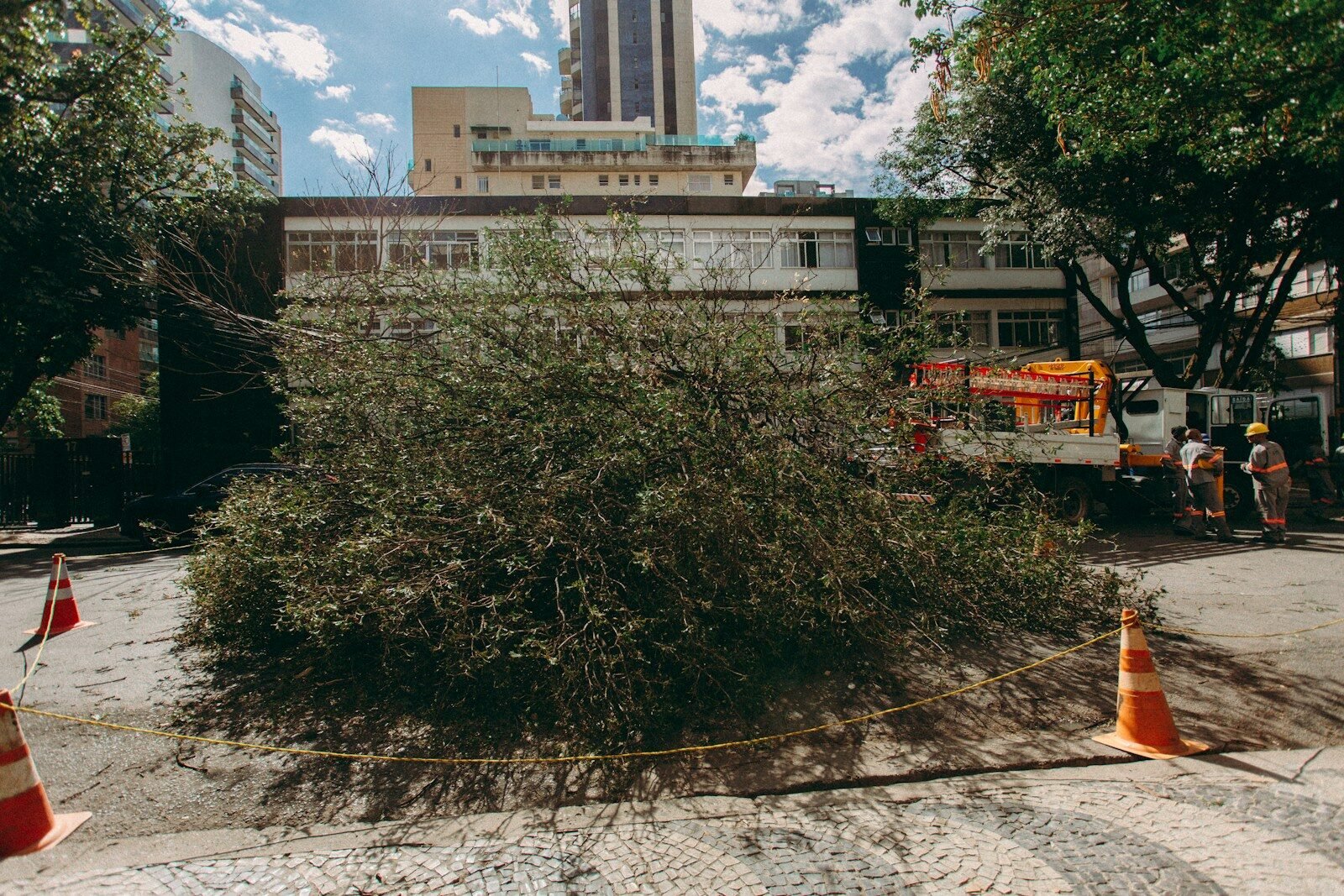
The Fredericksburg area gets its tree emergencies the usual Virginia ways: summer thunderstorms with straight-line wind, the occasional tropical system pushing up the Rappahannock, ice in a bad winter, and saturated soil after days of rain that lets a whole root plate let go. When a tree comes down in the wrong place, the first hour matters — mostly for what you should not do.
Right Now: The Safety List
- Stay clear of the tree and anything it is touching. A trunk or limb resting on a roof or a car is under stored tension. It can shift, roll, or spring without warning.
- Treat every wire as live. If a tree is in or near power lines, do not approach it, and do not let anyone else. Call the power company for the wires; a tree company works the tree once the lines are safe.
- Do not climb or cut it yourself. A storm-bent limb is loaded like a spring, and cuts made in the wrong order release that energy at the person holding the saw. This is the work that injures homeowners every storm season.
- If a tree is on the house, get everyone to a part of the home away from the damage, and if water is coming in or you smell gas or see sparking, leave and call 911 first. Tree work comes after life safety, every time.
- Document before anything moves. If it is safe to do from a distance, take photos of the tree, the damage, and what it hit. Insurers ask, and the tree will not look the same after it is cut.
What to Tell Us When You Call
A few details triage your call correctly:
- Is the tree on or leaning toward a structure? A house, garage, car, fence — or is it down in open yard? Work on structures goes first.
- Is access blocked — driveway, road, or a door you cannot use?
- Are power lines involved, or visibly down?
- Roughly how big is the tree, and is it fully down, split, or hanging in another tree?
How Storm Work Is Sequenced
Companies triage storm calls the same way everywhere: trees on occupied structures and blocked access first, then hangers and split trees that are threatening to finish falling, then downed trees in open ground, which are inconvenient but not dangerous. A tree down in the back yard with nothing under it can safely wait a few days while the urgent work clears — and honest companies will tell you that instead of selling you emergency pricing for a non-emergency.
For insurance, keep the tree company’s invoice and your photos together; removal of a tree that hit a covered structure is commonly part of a claim, while removal of an undamaged yard tree commonly is not. That is general information, not a coverage promise — your policy and your insurer decide.
If you reach voicemail during a storm event, leave the triage details above and use the contact form too, marking urgency as emergency. The key question on the form — “Is the tree on/leaning toward a structure?” — decides your place in the queue, so answer it plainly.
Related: Tree Removal · How to Tell a Tree Is Dangerous · Contact