Tree Trimming & Pruning in Fredericksburg, VA
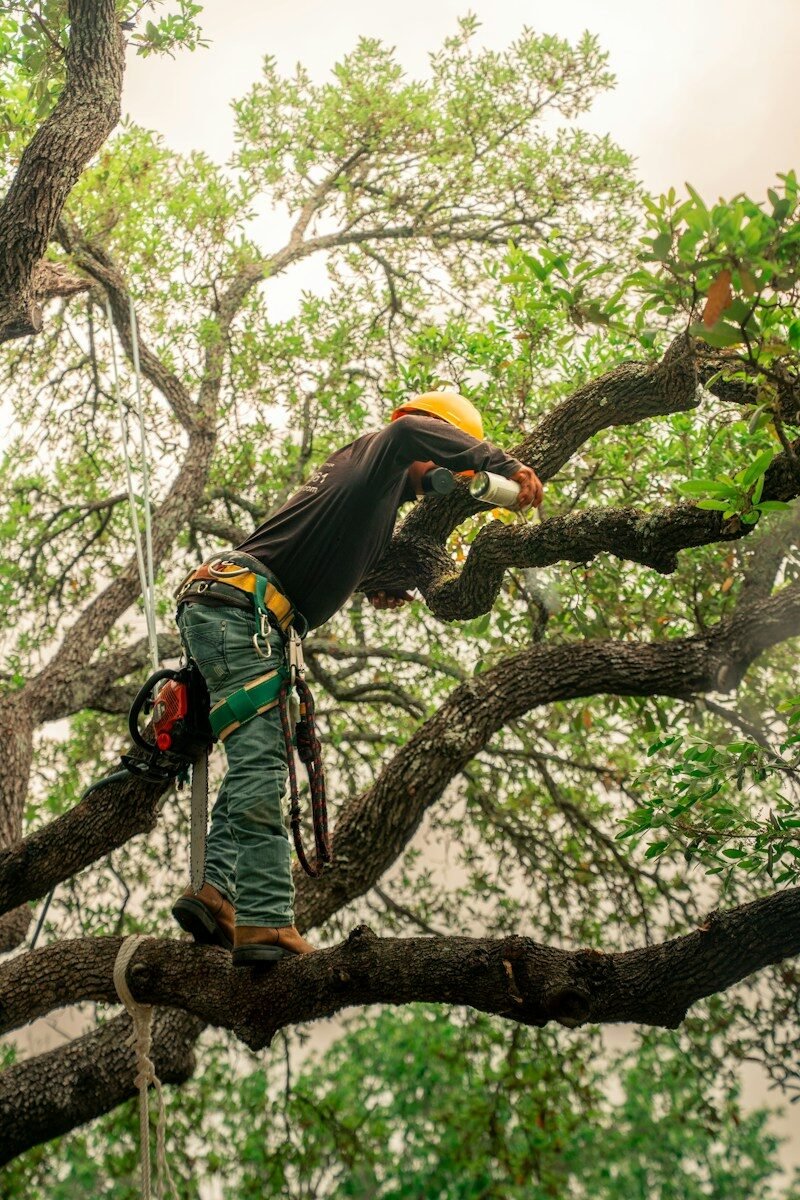
A well-pruned tree is safer in a storm, healthier over its life, and better looking — and none of that requires taking much off it. Most good pruning is selective: the right branches, cut at the right place, for a stated reason. This page explains what proper work looks like so you can tell it apart from the kind that harms trees.
What Good Pruning Includes
- Deadwood removal. Dead branches are the ones that come down in ordinary wind, onto roofs, cars, and people. Taking them out is the highest-value pruning there is.
- Clearance. Branches lifted and cut back from roofs, chimneys, driveways, and walkways — with enough clearance that the tree is not back on the shingles in two seasons.
- Structure and weight reduction. Long, heavy limbs — common on the mature oaks and maples throughout Spotsylvania and Stafford — can be lightened with reduction cuts at the ends, which lowers the leverage a storm has on the limb without gutting the canopy.
- Crossing and rubbing branches. Branches that rub wound each other and invite decay. Removing the weaker one early is cheap; removing a decayed trunk section later is not.
What Good Pruning Never Includes
Topping — cutting the top off a tree and leaving stubs — is the single most harmful common practice. A topped tree responds with a flush of weak, fast growth attached at exactly the wrong places, and the large wounds invite decay into the trunk. Within a few years the tree is more dangerous than it was, not less. If a company proposes topping, that is your answer about the company.
The same goes for flush cuts (cutting tight to the trunk, removing the branch collar the tree uses to close the wound) and lion-tailing — stripping all the interior growth so the weight sits at the limb ends like a pom-pom. Proper cuts are made just outside the branch collar, at a size the tree can seal.
When to Prune
Deadwood can come out any time it is found. Structural pruning is easiest to judge in winter, when the branch architecture is visible, and most trees handle dormant-season work well. Oaks deserve a special note: pruning oaks during the growing season can expose them to oak wilt transmission in areas where the disease is present, so dormant-season timing is the cautious default — ask the company working on your oaks how they time it. Storm-damaged and hanging branches are the exception to every timing rule: a hazard comes down when it is found, in any season.
Tell us the species if you know it, what is overhanging or concerning you, and your town. We will connect you with an insured local company, and the estimate conversation is the place to ask exactly which branches they propose to cut, and why.
Related: How to Tell a Tree Is Dangerous · Tree Removal · Contact